Project Overview
The Challenge
Create a brand identity for our studio "Pixel Paranoia" that reflects our creative vision. The goal was to demonstrate successive iterations of my creative process and how each iteration improved the design based on feedback.
- Design must represent "pixel" and "paranoia" concepts
- Logo needs to work at various sizes (website, print, favicon)
- Must be distinctive and memorable
- Should reflect fun and pixelated gaming aesthetic
The Goal
Develop multiple logo concepts through an iterative design process, gathering feedback at each stage to refine and improve the final design.
- Explore pixel elements and geometric forms
- Experiment with glitch effects and pixelized imagery
- Create clear, scalable typography
- Test designs at different sizes for visibility
Initial Concepts
First Exploration - Sketches to Digital
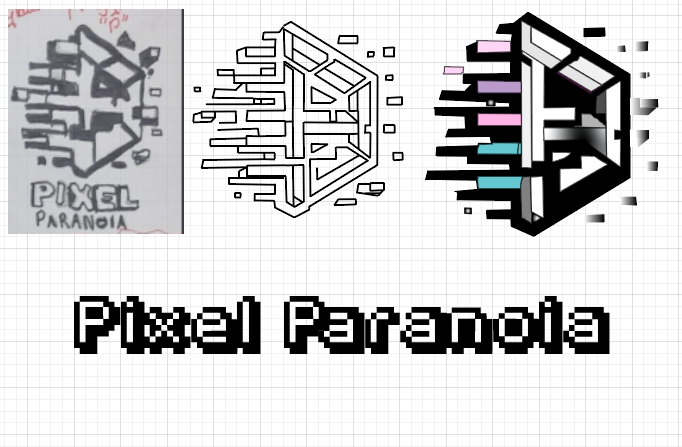
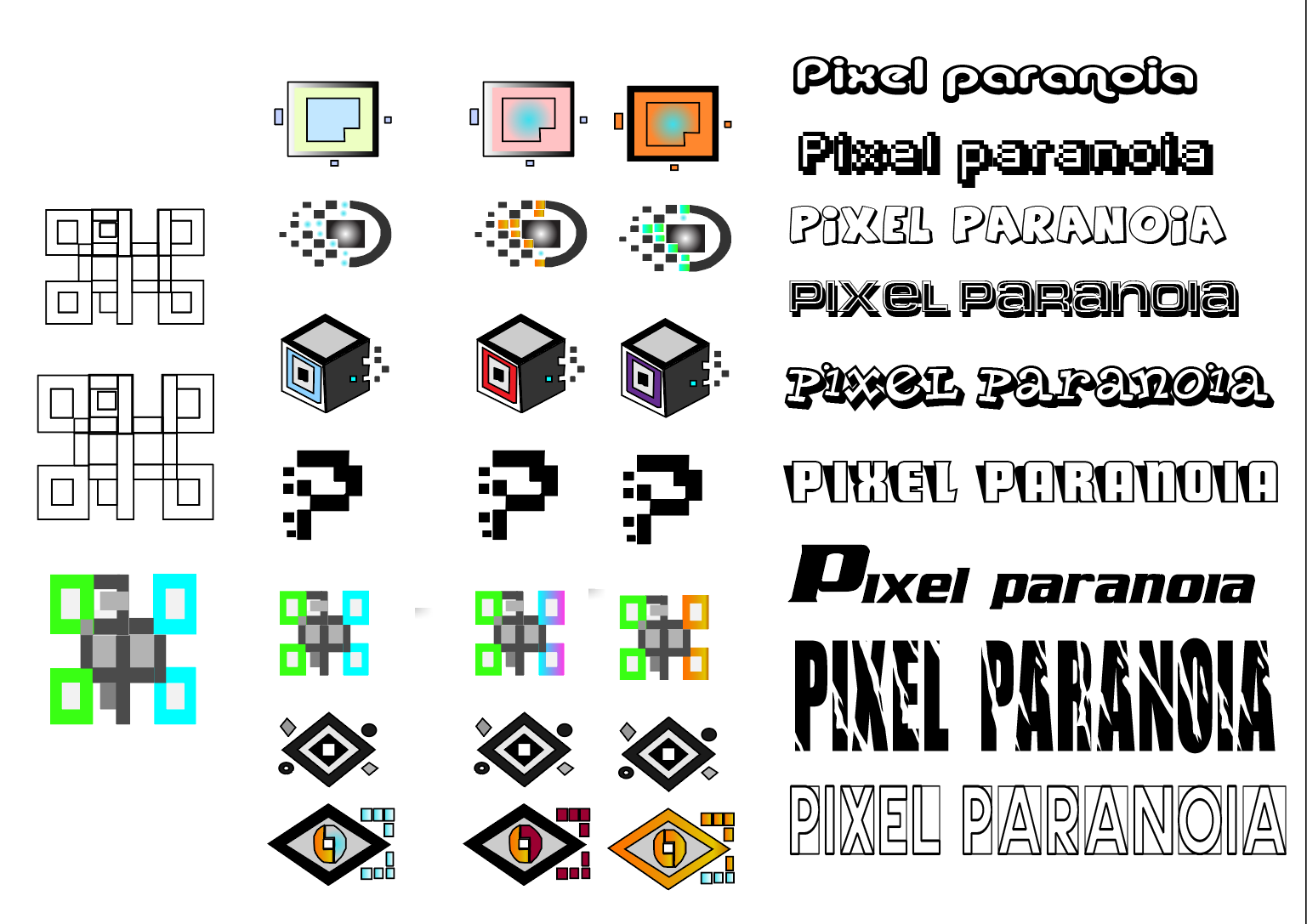
The earliest concepts began with hand sketches exploring pixel elements, geometric forms, and visual styles. After choosing our group name, I created logo designs based on what our group wanted to reflect - fun and pixelated styles. The designs evolved from rough sketches to digital wireframes to colored versions.
Design Iterations
Digital Refinement in Adobe Illustrator
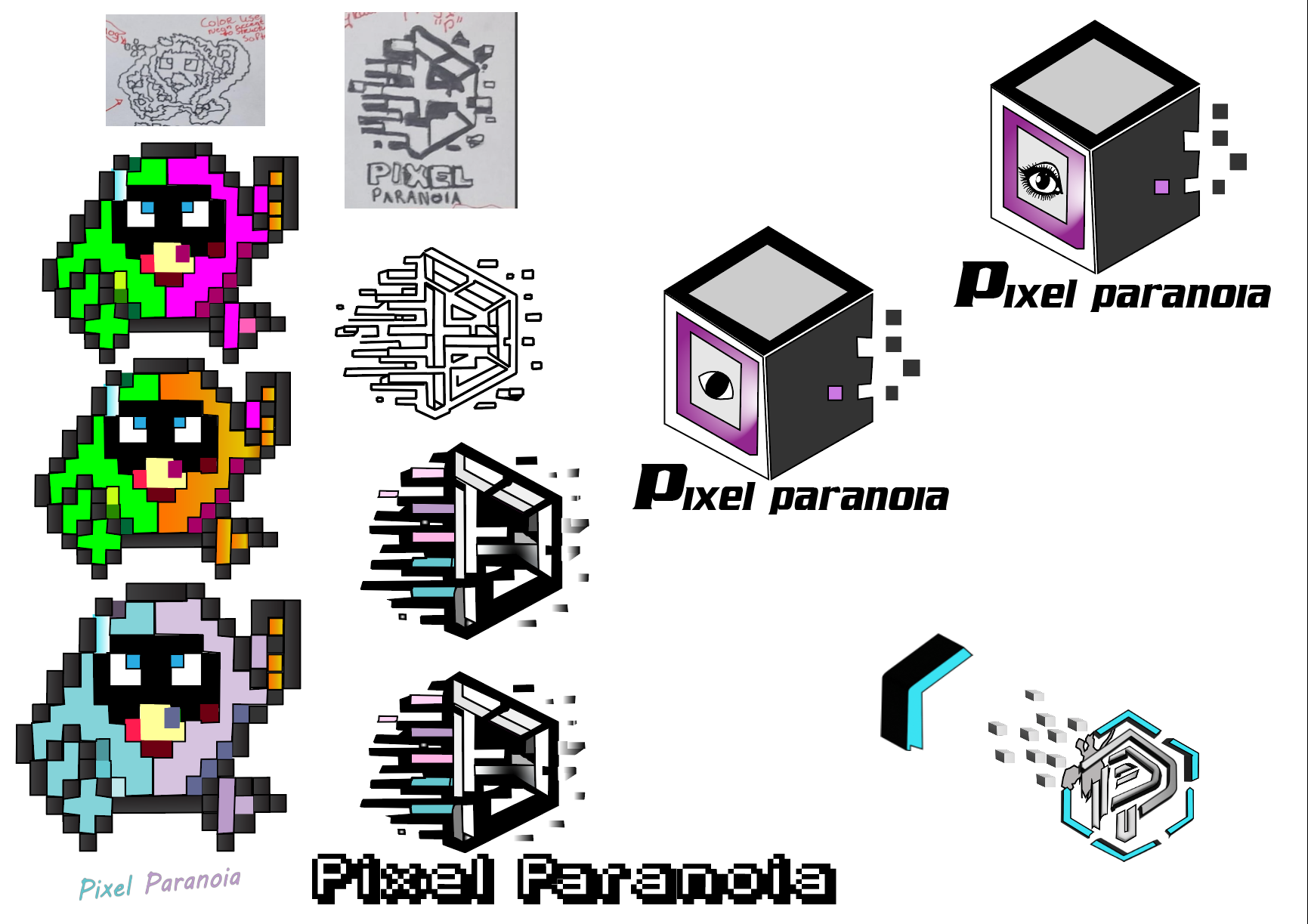
I created my sketches in Adobe Illustrator using my drawing tablet, which allowed me to make the logo quite detailed. However, feedback from my group and teacher indicated that the logo was too detailed - the fine details wouldn't be visible when displayed on smaller screens, such as on a website.
Cube Logo Variations
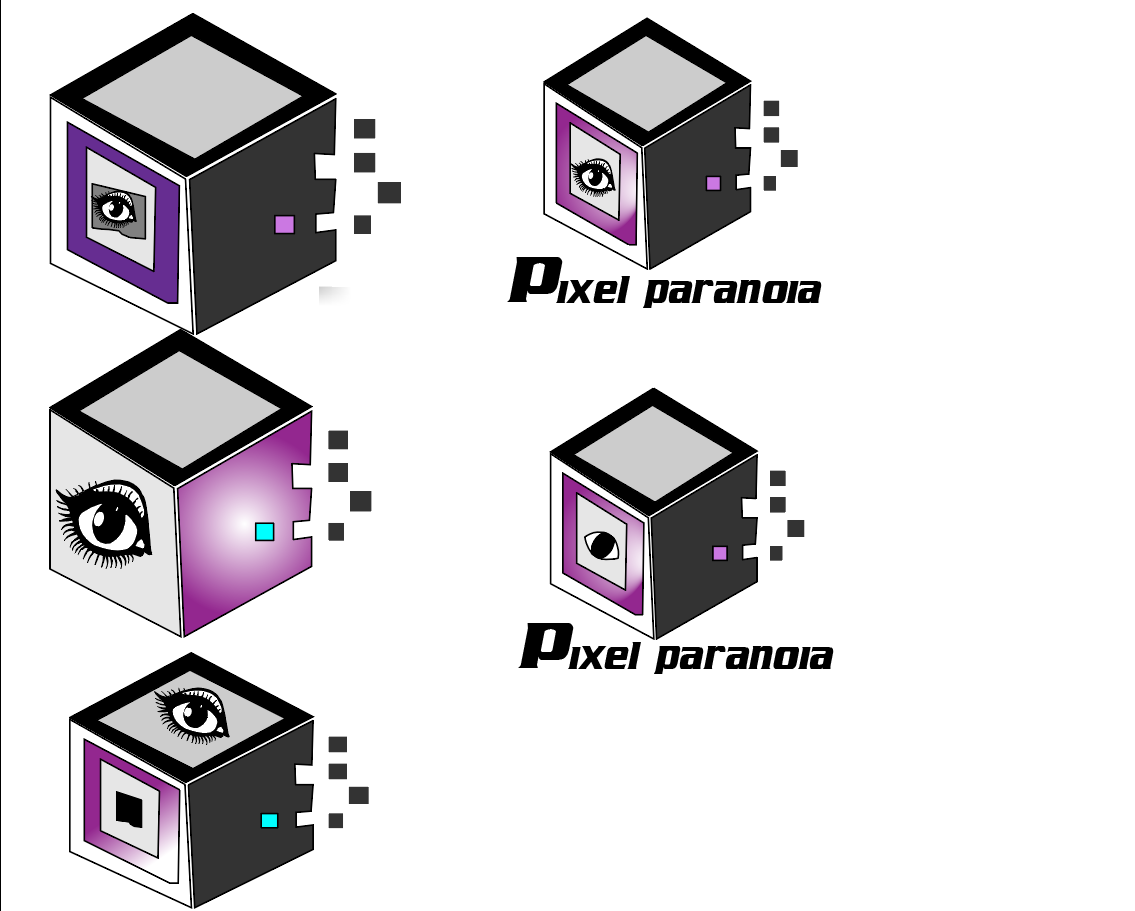
Professor Josh liked the pixelated cube logo as it better represented the "Pixel Paranoia" name, though he advised further simplification. The pixel cube concept became the central focus, with the eye element adding the "paranoia" feeling. Multiple variations were created with different color schemes and eye styles.
Typography & Color Exploration
Extensive exploration of typography options, color palettes, and icon variations. Each concept was tested for readability, scalability, and brand recognition. The eye motif represents the "paranoia" element while geometric shapes represent the "pixel" aesthetic.
Key Learnings
Feedback Integration
Through these iterations, the project evolved significantly in terms of both design and functionality. Each iteration was driven by feedback and focused on refining the user experience.
- Simplification improves scalability
- Details get lost at small sizes
- Core concept must be immediately recognizable
- Color choices affect brand perception
Process Reflection
Although my logo was not the one chosen by the group in the end, the process allowed me to refine my design skills and better understand the importance of iterative feedback in a collaborative project.
- Iteration leads to better solutions
- Peer feedback is invaluable
- Testing at different sizes is crucial
- Documentation helps track progress
Tools & Techniques
Design Stack
Explore More Projects
Check out my other design and development work!